English
  한국어
한국어  français
  Deutsch
  Español
  italiano
  русский
  čeština
  Polska
  Svenska
  magyar
  Nederland
Top Heat Resistant Tape Manufacturers to Watch in 2025
Heat resistant tape plays a key role in modern industry. Many sectors, from aerospace to electronics, depend on it for insulation and safety. The global market for these tapes is growing quickly, expected to reach $9.86 billion in 2025.
Selecting the right Heat Resistant Tape Manufacturer involves looking at innovation, product range, and reliability. Each industry has different needs, as shown below:
Industry | Common Tape Types Used | Specific Requirements and Applications |
|---|---|---|
Aerospace | Kapton (polyimide) tape | Extreme heat resistance, insulation, up to 752°F |
Automotive | Silicone adhesive tapes | Strong bonding, gaskets, up to 500°F short-term |
Electronics | PET and foil tapes | Masking, EMI/RFI shielding, up to 600°F |
Key Takeaways
Heat resistant tapes protect industries like aerospace, electronics, and automotive from extreme heat and improve safety and efficiency.
Top manufacturers such as 3M, tesa SE, and DuPont lead the market with innovative, high-quality tapes that meet strict standards.
Different tape types like silicone, Kapton (polyimide), and glass cloth serve specific needs based on temperature resistance and application.
Choosing the right manufacturer means considering product range, certifications, customer support, and the ability to customize tapes.
Using the correct tape type for each industry ensures long-lasting performance, strong adhesion, and protection against heat and chemicals.
Leading Heat Resistant Tape Manufacturers
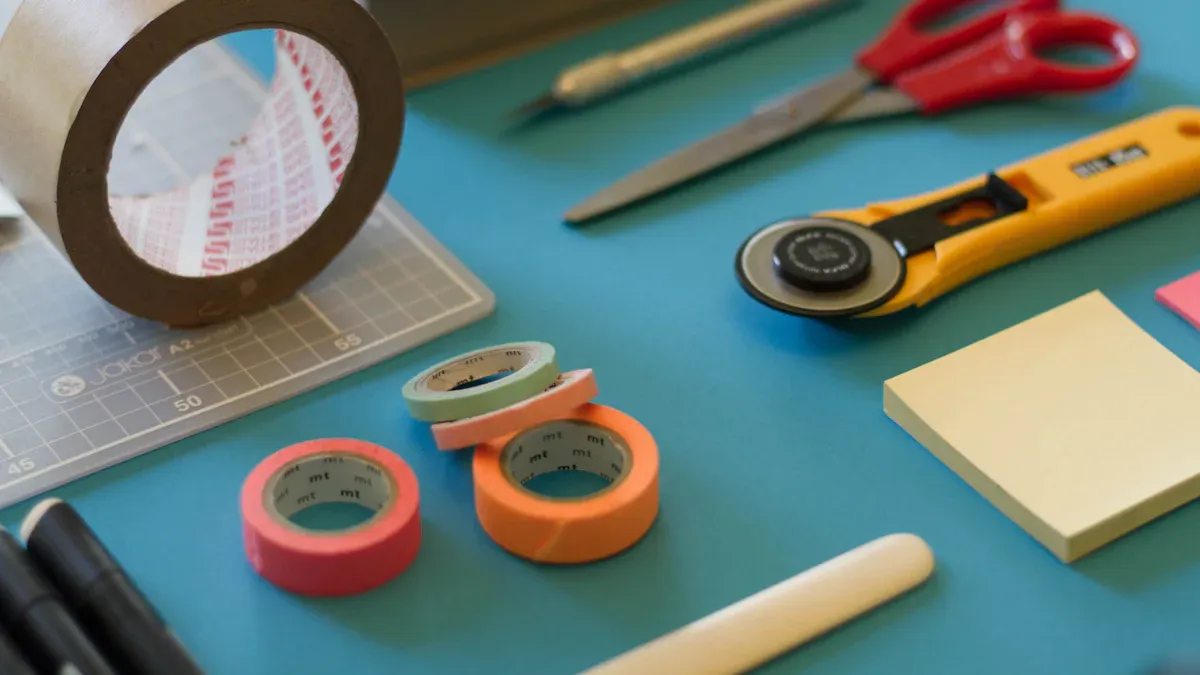
The global market for heat resistant tapes features several standout companies. These manufacturers lead the industry with innovation, product quality, and a broad range of solutions. Below, each Heat Resistant Tape Manufacturer is profiled for their specialties and unique strengths.
3M
3M stands as a global leader in the heat resistant tape market. The company operates from the United States and serves industries worldwide. 3M’s product portfolio covers a wide range of applications, from automotive paint-bake operations to electronics and industrial manufacturing.
Key Features of 3M Heat Resistant Tapes:
Feature | Description |
|---|---|
Up to 600ºF (316ºC) | |
Backing Material | Options include thick crepe paper and dead soft aluminum foil |
Adhesive | Rubber and silicone adhesives for instant bonding and high temperature performance |
Removal | Clean, residue-free removal even from hot surfaces |
Specialty | Prevents paint bleed-through, provides clean paint lines, and offers flame resistance |
3M continues to innovate with products like the Ultra High Temperature Adhesive Transfer Tape 9082, which withstands up to 540°F (280°C) short-term. The Venture Tape High Temperature Aluminum Foil Tape 3243 supports applications up to 425°F (218°C) and meets strict UL and flame resistance standards. These advancements show 3M’s commitment to durability, safety, and specialized adhesive technology.
Hopelight
Hopelight Electrical is located in Shenzhen China. The company, founded in 2011, is an integrated heat resistant tape manufacturer combinating research and development, production, sales, and service. As one of the innovative new material technology companies, we have a wealth of high-temperature tape production technology and years of industry experience, adhering to the "integrity, innovation, pragmatic and progressive”business philosophy, commitment to the development and application of high-end electronic materials.
Nitto Denko Corporation
Nitto Denko Corporation, headquartered in Japan, is a major Heat Resistant Tape Manufacturer recognized for its advanced materials technology. Nitto’s tapes serve industries like electronics, automotive, and aerospace. The company’s heat resistant tapes include polyimide, glass cloth, and PTFE-based products. Nitto focuses on innovation, offering solutions that combine high temperature resistance with electrical insulation and chemical durability. Their research and development drive continuous improvement in tape performance.
Chukoh Chemical Industry
Chukoh Chemical Industry, also from Japan, specializes in fluoropolymer-based heat resistant tapes. The company’s products excel in environments with extreme temperatures and chemical exposure. Chukoh’s tapes are widely used in electronics manufacturing, food processing, and industrial machinery. The company’s expertise in PTFE and silicone-coated fabrics ensures reliable performance in harsh conditions.
Teraoka Seisakusho
Teraoka Seisakusho, another leading Japanese Heat Resistant Tape Manufacturer, focuses on industrial and electrical applications. The company’s product range includes glass cloth, polyimide, and aluminum foil tapes. Teraoka’s tapes provide strong adhesion, high temperature resistance, and electrical insulation. The company’s commitment to quality and innovation secures its position among the top global players.
Top Global Leaders in Heat Resistant Tape Production (2024-2025):
3M
Hopelight
KGK Chemical Corporation
Nitto Denko Corporation
Teraoka Seisakusho
These companies lead the market based on production capacity, product value, and recent developments.
KGK Chemical Corporation
KGK Chemical Corporation, based in Japan, has earned recognition as a top Heat Resistant Tape Manufacturer. The company’s tapes serve the electronics, automotive, and industrial sectors. KGK’s product line includes high temperature masking tapes, polyimide tapes, and specialty adhesive solutions. The company emphasizes product reliability, consistent quality, and technical support for global customers.
DuPont
DuPont, headquartered in the United States, is known for its Kapton polyimide tapes. These tapes withstand temperatures up to 400°C (752°F) and provide excellent electrical insulation and chemical resistance. DuPont’s Kapton tape finds use in aerospace, electronics, automotive, and medical devices. The company also offers Ttape 1000A, a thermally conductive adhesive tape developed with Laird. This tape delivers strong adhesion, low thermal resistance, and RoHS compliance. DuPont’s focus on durability and performance makes it a preferred choice for high-heat and high-reliability applications.
DuPont’s Kapton tape supports industrial furnaces, spacecraft, and photovoltaic systems.
Ttape 1000A serves consumer electronics, telecommunications, and datacom sectors.
Saint-Gobain
Saint-Gobain, based in France, manufactures heat resistant tapes for industrial, automotive, and construction markets. The company’s tapes include PTFE, glass cloth, and silicone adhesive products. Saint-Gobain’s solutions offer high temperature resistance, non-stick properties, and chemical durability. The company’s global distribution network ensures timely delivery and technical assistance.
Jiuju Tech
Jiuju Tech, an emerging Heat Resistant Tape Manufacturer from China, has expanded rapidly in recent years. The company produces a wide range of tapes, including polyimide, glass cloth, and aluminum foil types. Jiuju Tech focuses on cost-effective solutions and customization for electronics, automotive, and industrial clients. The company’s growth reflects increasing demand for reliable heat resistant tapes in Asia and beyond.
Other Notable Manufacturers
Several other companies contribute to the global heat resistant tape market. These include:
Scapa Group (UK): Offers specialty tapes for medical, electronics, and industrial uses.
Shurtape Technologies (USA): Provides high temperature masking and foil tapes for HVAC and automotive sectors.
Advance Tapes (UK): Supplies glass cloth and aluminum foil tapes for construction and electrical applications.
Lohmann GmbH & Co. KG (Germany): Delivers double-sided and foam tapes for industrial assembly and bonding.
These manufacturers, along with major distributors and brands, ensure a diverse and competitive market. Customers benefit from a wide selection of products tailored to specific industry needs.
What Sets a Heat Resistant Tape Manufacturer Apart
Innovation
Innovation drives the heat resistant tape industry forward. Leading companies invest heavily in research and development. They create new products that solve real-world problems and meet strict industry standards. For example, in March 2023, E KISUI CHEMICAL launched the world's first transfer tape that handles high heat, thin film needs, rough surfaces, and low VOC emissions. Many China-based manufacturers now increase R&D spending to improve tape quality and performance. Companies that focus on innovation can:
Develop customized solutions for unique industry challenges.
Maintain a competitive edge by meeting specialized application needs.
Attract customers with advanced features and improved reliability.
Product Quality
Product quality remains a top priority for every Heat Resistant Tape Manufacturer. High-quality tapes must perform under extreme conditions. Certifications such as ASTM and ISO standards show that a product meets strict requirements. Well-known brands like DuPont’s Kapton tape offer consistent quality and undergo extensive testing. These certifications and brand reputations help customers trust the product’s reliability. Industrial buyers often look for these marks of quality before making a purchase.
Global Reach
A strong global presence sets top manufacturers apart. Companies with worldwide distribution networks can deliver products quickly and provide technical support in many regions. This reach ensures that customers receive reliable service and access to the latest products. Global manufacturers also understand local regulations and industry needs, which helps them serve a wide range of clients.
Customization
Industrial clients often need tapes tailored to their specific processes. Customization requests include die-cutting, slitting to exact widths, and special release liners. Design engineers work with clients to create custom solutions when standard products do not fit. Many manufacturers offer these services at no extra cost. Customization helps companies address unique challenges and improve efficiency in their operations.
Types of Heat Resistant Tape
Silicone Adhesive Tape
Silicone adhesive tape offers strong performance in high-temperature environments. This tape resists temperatures up to 500°F (260°C). Many industries use silicone tape for masking, splicing, and insulation. It provides excellent flexibility and resists aging, UV light, and solvents. Silicone adhesive tape works well with polyimide and glass cloth tapes. Manufacturers often choose silicone tape for its consistent performance across a wide temperature range.
Tip: Silicone tape is ideal for applications that require both flexibility and long-term durability.
Kapton (Polyimide) Tape
Kapton tape, made from polyimide film, stands out for its superior thermal stability. It withstands temperatures up to 500°F (260°C), higher than many other heat resistant tapes.
Key advantages of Kapton tape:
Maintains strength and adhesion under extreme heat
Offers excellent chemical resistance
Provides reliable electrical insulation
Performs well in harsh industrial environments
Serves electronics, aerospace, and automotive industries
Kapton tape’s versatility makes it a top choice for high-performance needs, such as circuit board masking, coil insulation, and aerospace wiring.
Glass Cloth Tape
Glass cloth tape features a woven fiberglass backing and high-temperature adhesive. It resists heat, abrasion, and flame.
Industries use glass cloth tape for:
Fixation of parts in ovens
Winding and securing ceramic heaters and quartz tubes
Strapping, coil end sealing, and heavy carton sealing
Glass cloth tape offers high tensile strength and electrical insulation. Electrical and industrial sectors rely on it for demanding applications that require heat preservation and corrosion resistance.
Acrylic Foam Tape
Acrylic foam tape provides moderate temperature resistance, sitting between silicone and rubber adhesives.
Tape Type | Temperature Resistance | Adhesive Characteristics | Typical Applications |
|---|---|---|---|
Silicone | High; consistent over wide range | Flexible, UV/solvent resistant | Masking, splicing, insulation |
Acrylic Foam | Moderate | Good adhesion, aging and UV resistance | Bonding, sealing, surface protection |
Polyimide | Excellent | High temp masking, electrical insulation | Electronics, aerospace, automotive |
Acrylic foam tape bonds well to many surfaces and provides reliable sealing. Manufacturers use it for bonding, surface protection, and plastic lamination. It works best in applications where moderate heat resistance and strong adhesion are required.
Choosing the Right Heat Resistant Tape Manufacturer
Selecting the right Heat Resistant Tape Manufacturer requires careful evaluation of several factors. Each factor can impact the success of a project or production line. The following points help guide the decision-making process.
Product Range
A broad product range signals a manufacturer’s ability to meet diverse needs. Companies that offer multiple types of heat resistant tape—such as silicone, polyimide, glass cloth, and acrylic foam—can support many industries. Buyers should review product catalogs and request samples. This step ensures the tape matches the application’s temperature, adhesion, and durability requirements.
Tip: Always check if the manufacturer provides custom sizes or specialty tapes for unique projects.
Certifications
Certifications show a manufacturer’s commitment to quality and safety. Look for tapes that meet international standards like ISO 9001, UL, or RoHS. These certifications confirm that the products have passed strict tests for performance and safety. Reliable manufacturers display their certifications on product datasheets and company websites.
Certification | What It Means |
|---|---|
ISO 9001 | Quality management system |
UL | Safety and performance |
RoHS | Restriction of hazardous substances |
Customer Support
Strong customer support helps buyers solve problems quickly. Leading manufacturers offer technical advice, fast response times, and after-sales service. Good support teams answer questions about tape selection, installation, and troubleshooting. Many companies also provide online resources and training.
Pricing
Pricing affects the total cost of ownership. Buyers should compare prices from several suppliers. It is important to balance cost with quality and service. Some manufacturers offer discounts for bulk orders or long-term contracts. Always ask about lead times and minimum order quantities.
Note: Fast delivery and flexible order options can save time and reduce project delays.
Applications and Benefits
Heat resistant tape supports many industries by providing reliable protection, insulation, and durability in high-temperature environments. Selecting the right tape type for each application ensures safety, efficiency, and long-term performance.
Industrial Uses
Industrial manufacturing relies on heat resistant tape for masking during powder coating, anodizing, and paint baking. Workers use these tapes to simplify assembly and protect surfaces exposed to heat. High-quality tapes withstand long-term heat exposure and reduce the need for extra fasteners. HVAC systems also benefit from these tapes, which seal and insulate ducts and pipes, improving system efficiency and resisting environmental factors.
Industrial Sector | Primary Uses and Applications | Reported Benefits |
|---|---|---|
Industrial Manufacturing | Masking during powder coating, anodizing, paint baking | Simplifies assembly; withstands long-term heat exposure; reduces need for additional fasteners |
HVAC Systems | Sealing, gasketing, insulating ducts and pipes exposed to heat | Maintains strong seals; resists heat and environmental factors; improves system efficiency |
Tip: Always match the tape’s temperature rating and adhesive type to the specific industrial process for best results.
Electronics
Electronics manufacturing uses heat resistant tape, especially polyimide tape, for electrical insulation and heat shielding. These tapes protect sensitive components during soldering and assembly. Polyimide tape resists temperatures up to 260°C (500°F) and maintains performance under harsh conditions. It prevents heat damage and short circuits, ensuring device reliability and safety. Manufacturers require tapes with high dielectric strength, solvent resistance, and no residue after baking. Applications include insulation of circuit boards, transformer coils, capacitors, and battery production. The tape’s flexibility and durability allow it to fit into tight spaces and resist punctures, making it essential for both consumer devices and demanding industries.
Automotive and Aerospace
Automotive and aerospace sectors demand tapes that perform under extreme heat, vibration, and chemical exposure. These industries use heat resistant tape for thermal shielding, protective wrapping, and sealing in engine, exhaust, and high-heat zones. Selecting the right tape involves considering temperature rating, adhesive compatibility, mechanical stress, and material selection. Polyimide, silicone, aluminum foil, and glass cloth tapes each offer unique advantages.
Key Consideration | Explanation | Examples/Details |
|---|---|---|
Temperature Rating | Match tape's max temperature rating to the highest heat expected in the application. | Polyimide tapes withstand -269°C to 400°C; Aluminum foil tapes up to 600°F (316°C); Silicone tapes up to 500°F. |
Adhesive Compatibility | Adhesive must bond well to the surface and resist chemicals, moisture, and heat over time. | Silicone adhesives resist chemicals and maintain >85% bond strength after acid exposure. |
Mechanical Stress | Tape must endure vibration, bending, abrasion, and thermal cycling without failure. | Polyimide tape offers high tensile strength and flexibility; Glass cloth tape provides abrasion resistance. |
Certifications | Look for UL, ASTM, or other safety certifications to ensure tape meets flame resistance and thermal stability standards. | UL and ASTM certifications validate performance and safety for aerospace and automotive use. |
High-quality tape ensures component reliability, thermal stability, and safety in critical systems.
Construction
Construction professionals use heat resistant tape for sealing, insulation, and surface protection. These tapes help maintain strong seals in areas exposed to heat, such as HVAC installations and fire-rated assemblies. Durable tapes resist aging, moisture, and environmental stress, supporting long-lasting building performance.
Summary Table: Main Sectors and Benefits
Sector | Key Benefits of High-Quality Tape |
|---|---|
Industrial | Simplifies assembly, withstands heat, reduces fasteners |
Electronics | Protects components, ensures safety, resists chemicals |
Automotive/Aero | Maintains reliability, resists vibration and chemicals |
Construction | Provides strong seals, resists aging and moisture |
Choosing the correct tape type for each application maximizes safety, efficiency, and product lifespan. Matching tape properties to the environment and process requirements remains essential for optimal results.
Top manufacturers like 3M, tesa SE, and DuPont lead the market with innovation, quality, and global reach. Each Heat Resistant Tape Manufacturer offers unique strengths for different industries. Readers should review their project needs and compare product features, certifications, and support.
For best results, contact suppliers for samples or technical advice before making a final choice.
FAQ
What is the highest temperature heat resistant tape can handle?
Some tapes, like DuPont’s Kapton, withstand up to 752°F (400°C). Always check the product’s datasheet for exact ratings. Different materials offer different maximum temperatures.
How do buyers verify tape quality before purchase?
Buyers should request datasheets, certifications, and product samples. Trusted manufacturers provide ISO, UL, or RoHS certificates. Testing samples in real applications helps confirm performance.
Can manufacturers customize heat resistant tape sizes?
Yes. Most leading manufacturers offer custom widths, lengths, and die-cut shapes. Customization ensures the tape fits specific equipment or processes.
Which industries use heat resistant tape most often?
Aerospace, electronics, automotive, and construction industries use heat resistant tape for insulation, masking, and protection. Each sector values reliability and safety.
How should users store heat resistant tape?
Store tape in a cool, dry place away from sunlight. Keep rolls in original packaging to prevent dust and moisture exposure. Proper storage maintains adhesive strength and shelf life.