English
  한국어
한국어  français
  Deutsch
  Español
  italiano
  русский
  čeština
  Polska
  Svenska
  magyar
  Nederland
Exploring the Main Uses and Purpose of Masking Tape
The main job of masking tape is to serve the purpose of masking tape by sticking things together for a short time. It also keeps things safe while you work. You see masking tape in houses and factories because it can be used in many ways. People use masking tape when they paint, make labels, and even in airplanes. Masking tape helps keep surfaces safe and assists in making straight lines.
Masking tape helps with many kinds of projects. These are the three main industries that use masking tape:
Industry | Description |
|---|---|
Apparel Industry | This industry uses the most tape. Tape makes clothes stronger and keeps water out of them. |
Appliance Industry | Tape keeps appliances safe when moving. It can handle different weather and temperatures. |
Aviation Industry | Tape is used to build airplanes. It can handle high pressure and big changes in temperature. |
Making masking tape affects nature too. Recycling masking tape saves energy and helps protect trees. However, it is hard to take the sticky part off the paper. Many people choose masking tape because it works for both easy and hard tasks.
Key Takeaways
Masking tape can be used in many ways. You can use it for painting. It helps with labeling things. It also protects surfaces during different projects.
Pick the right masking tape for your job. Regular tape is good for simple tasks. Heat resistant tape works better in hard situations.
Put the tape on the right way. Do not stretch the tape when you use it. Take the tape off at a 45-degree angle. This helps keep things neat.
Purpose of Masking Tape
What Is Masking Tape
Masking tape is a simple tool. You use it when you need to stick things for a short time. It also helps protect surfaces while you work. The tape is made from crepe paper or flat-backed paper. This makes it strong and flexible. You can tear masking tape by hand. This makes it easy to use in many ways.
Masking tape works for many jobs. People use it for painting, building, and electronics. It helps protect surfaces from paint and dust. Masking tape sticks well to many surfaces. You can take it off easily when you finish. It does not leave much sticky stuff behind.
Hopelight makes special heat resistant tapes for tough jobs. These tapes can handle high heat and hard conditions. You find them in electronics, cars, and airplanes. Hopelight’s tapes are safe and work well for big projects.
Masking tape is useful for many things. You can use it for painting, labeling, fixing, and protecting surfaces.
Key Features and Benefits
Masking tape has special features that make it helpful. It fits different surfaces and holds tight. Here are the main things that make masking tape work well:
Backing Material: Most masking tape uses crepe paper or flat-backed paper. This lets you shape the tape around corners and edges.
Adhesive Type: There are rubber-based, acrylic-based, or silicone-based adhesives. Each type works for different jobs.
Adhesive Strength: Masking tape sticks well but is easy to remove. It does not hurt surfaces.
Temperature Resistance: Regular masking tape works inside. Special masking tape can handle high heat, up to 200°C.
Feature | Description |
|---|---|
Conformable | Fits many surfaces for a tight hold. |
Hand tearable | You can tear it by hand easily. |
Residue-free removal | It does not leave sticky stuff behind. |
Weather & temperature resistant | Works inside and outside, even in high heat. |
Chemical resistant | Stays strong when near chemicals. |
Masking tape helps protect surfaces and make clean lines. In painting, it helps you get sharp edges. In building, it keeps dust and dirt away. In electronics, it helps label wires and cover parts.
You can use masking tape on wood, metal, glass, and plastic. This makes it good for many projects.
Heat resistant masking tapes, like Hopelight’s, give extra help in factories. You use them when you need to stop heat damage. These tapes protect parts from heat, rust, and scratches. They also give good insulation and strong seals. Hopelight’s tapes are safe and help you work better.
New masking tapes have more choices. Some tapes help you make straight lines. Some have strong glue but are easy to remove. Some tapes work in high heat. Eco-friendly masking tapes help the planet and still work well.
Tip: Pick the right masking tape for your job. Regular masking tape is good for daily tasks. For hot or tough jobs, use heat resistant masking tape from trusted brands like Hopelight.
Masking tape does many things. You use it to protect, label, seal, and fix. It is a handy tool for workers and people who do projects at home.
Masking Tape Uses
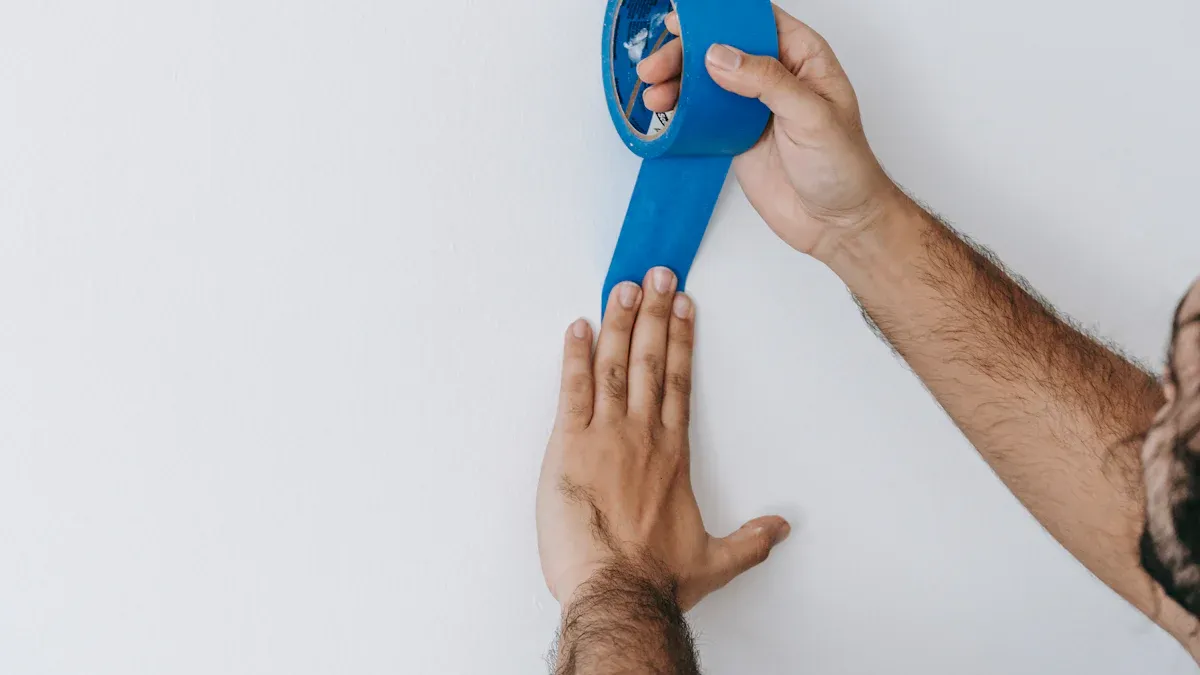
Image Source: pexels
Painter's Tape for Clean Lines
You use painter's tape when you want sharp edges and neat results. Painter's tape helps you mask areas while painting, so you do not get paint on places you want to keep clean. You see painter's tape in homes, schools, and factories. It works for walls, doors, and trim. You can use painter's tape on wood, metal, or glass.
High-quality painter's tape gives you strong adhesion. It stops paint from bleeding under the tape. You save time because you do not need to fix mistakes. You finish painting faster and get a professional look.
Here are the most common masking tape uses in painting and woodworking:
Painting and Surface Protection: You use masking tape to create clean lines and protect surfaces.
Labeling and Organization: You make temporary labels for paint cans or brushes.
Crafting and DIY Projects: You use masking tape for stencils and paper crafts.
Automotive and Industrial Applications: You protect car parts during painting or repairs.
Painter's tape helps you work quickly and neatly. You peel it off easily when you finish. You do not see sticky marks left behind.
Construction and Repairs
You use masking tape in construction for many jobs. You protect surfaces, mark zones, and bundle materials. Masking tape helps you keep dust and paint away from places you do not want to touch. You use it for drywall, plastering, and repairs.
Surface Protection During Painting: You create crisp edges and only paint the area you want.
Plastering and Drywall: You cover sensitive spots to avoid splatter.
Marking and Labeling: You write instructions or names on masking tape.
Holding and Bundling: You bundle wires or pipes until you fix them in place.
Protection from Dust or Debris: You tape off areas to keep them clean.
Low-adhesion masking tape keeps delicate surfaces safe. Medium-adhesion tape gives you sharp lines for renovations. High-adhesion tape stays in place even in humid rooms.
Hopelight’s heat resistant tape works well for high-temperature jobs. You use it in factories, car shops, and electronics. It stays strong in heat and does not break down.
Feature | Competitors (Not Specified) | |
|---|---|---|
High-Temperature Resistance | Excellent | N/A |
Corrosion Resistance | Excellent | N/A |
Application Range | Wide | N/A |
Stability in High-Temperature | Maintains properties | N/A |
You choose Hopelight’s tape when you need masking that lasts in tough conditions.
Labeling and Organization
You use masking tape to label and organize things at home, school, or work. Masking tape helps you keep track of supplies, tools, and samples. You write on masking tape with a pen or marker. You stick it on boxes, folders, or machines.
Name Tags and School Supplies: You label books, notebooks, and lunch boxes.
Educational Materials: You keep information clear on textbooks and folders.
Patient Information and Medication Labels: You use masking tape in hospitals for safety.
Laboratory Equipment and Samples: You mark test tubes and trays.
Broad Industry Applications: You organize items in warehouses and stores.
Masking tape makes labeling easy and quick. You remove it when you do not need it anymore. You do not see sticky residue left behind.
Surface Protection
You use masking tape to protect surfaces in many industries. In automotive work, you mask mirrors, door panels, and trim. In electronics, you cover parts during assembly. Masking tape keeps paint, dust, and scratches away from important areas.
3M Automotive Masking Tape 2308 works for car projects. It resists lifting and curling. It removes cleanly and handles heat up to 250°F. TM27 TrimFast helps you mask moldings and corners. It peels off easily after painting.
Automotive shops use masking tape and films to protect parts during assembly. These tapes work in low and high temperatures. You use them for many tasks.
Hopelight’s heat resistant tape gives you extra protection in hot environments. You use it for electronics, cars, and machines. It keeps surfaces safe from heat and corrosion. You get strong masking that lasts through tough jobs.
Masking tape uses keep growing. You see more eco-friendly options. You see stronger tapes for hard jobs. You see more people using masking tape for DIY projects at home.
Tip: Choose the right masking tape for your job. Use painter's tape for clean lines. Use heat resistant tape for hot or tough jobs. Use labeling tape for quick organization.
Choosing and Using Masking Tape
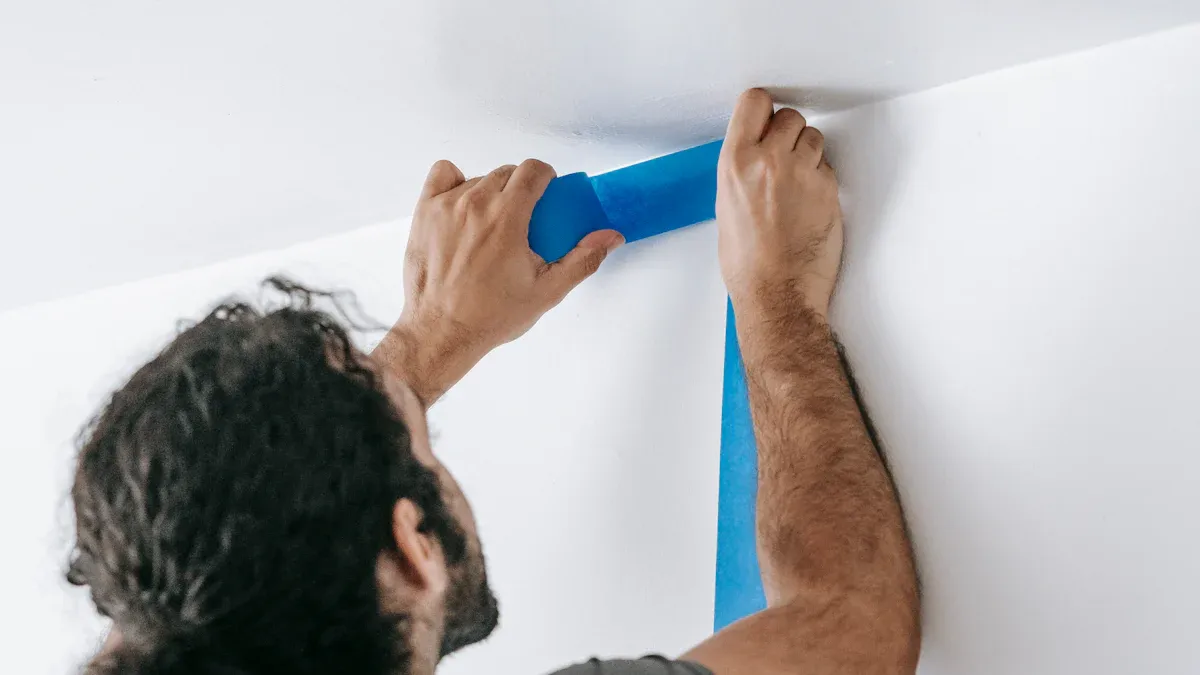
Image Source: pexels
Selecting the Right Tape
You should pick masking tape that fits your project. Think about the surface you will use. Smooth surfaces need tape that is less sticky. Rough surfaces need tape that sticks more. If your job is hot, use tape that can handle heat. If you want to remove tape cleanly, choose tape with good glue. Wide tape covers big spaces. Narrow tape works well for small curves and details.
Criteria | Description |
|---|---|
Surface Type | Smooth surfaces need less sticky tape. Rough surfaces need tape that sticks more. |
Temperature Resistance | Make sure the tape can handle heat if needed. |
Adhesion Time | Use regular tape for short jobs. Use UV tape for longer jobs. |
Clean Removal | Good glue does not hurt surfaces or leave sticky stuff. |
Tape Width | Wide tape covers more space. Thin tape is good for curves and details. |
Masking tape can use rubber-based or acrylic-based glue. Rubber-based tape sticks fast and works best on smooth surfaces. Acrylic-based tape sticks to many surfaces and handles heat well.
Application Tips
You get better results if you use masking tape the right way. Do not pull or stretch the tape when you put it on. This stops the tape from curling or ripping. Take off masking tape at a 45-degree angle. This helps keep things clean. Always check the instructions for how long to leave the tape on. If you use masking tape right, you get neat lines and easy cleanup.
Peel tape off at a 45-degree angle.
Take off masking tape when the instructions say.
Common Mistakes to Avoid
People sometimes make mistakes with masking tape. Using the wrong tape can leave sticky stuff or hurt surfaces. Leaving tape on too long makes the glue hard. This can leave sticky marks and chip paint. Wrinkles in tape make messy lines and let paint leak. You should smooth the tape as you put it on. If you see wrinkles, pull the tape back and try again.
Tip: Use a putty knife or a card to smooth masking tape. Take off masking tape within one hour for best results.
People say cheap masking tape leaves sticky stuff behind. Tape that curls or does not stick in wet or cold places is annoying. Good masking tape gives neat lines and stops paint from leaking.
You find masking tape in many places like homes and factories. People use it to paint, label, protect, and organize things. Masking tape helps make straight lines and keeps surfaces safe. You can use masking tape for small repairs or big jobs. More people buy masking tape because it works well for lots of tasks.
Masking tape is good for DIY, work, and industry.
It sticks well, protects surfaces, and gives neat results.
Heat resistant masking tape helps with tough jobs.
Experts say masking tape is important for good painting.
You do better work when you pick the right masking tape. Hopelight is a good choice for professional jobs.
FAQ
What surfaces can you use masking tape on?
You can use masking tape on wood, metal, glass, and plastic. It sticks to most surfaces. You can take it off easily. It does not leave sticky stuff behind.
How do you remove masking tape without leaving residue?
Pull the tape off slowly. Try to keep a 45-degree angle. This helps stop sticky marks. Your surface stays clean.
Can masking tape handle high temperatures?
Some masking tape works in hot places. Heat resistant tape is best for these jobs. You use it in factories, cars, and electronics.
Tip: Always read the label before using masking tape for hot jobs.
Use Case | Recommended Masking Tape Type |
|---|---|
Painting walls | Standard masking tape |
Electronics | Heat resistant masking tape |
Labeling items | General masking tape |
Masking tape helps with painting, labeling, and protecting.
You see masking tape in homes, schools, and factories.
Masking tape gives neat lines and comes off easily.